Air New Zealand Airbus A320-200 (171 Economy) vs Vueling Airbus A320-200 (180 seats)
Air New Zealand Airbus A320-200 (171 Economy) has 171 seats and Vueling Airbus A320-200 (180 seats) has 180.
Cabins side by side
| Cabin | Seats | Rows | Layout | Seat | Recline |
|---|---|---|---|---|---|
Air New Zealand · 171 EconomyEconomy | 171 | 1–29 | 3-3 | Standard seat | 3.9 in |
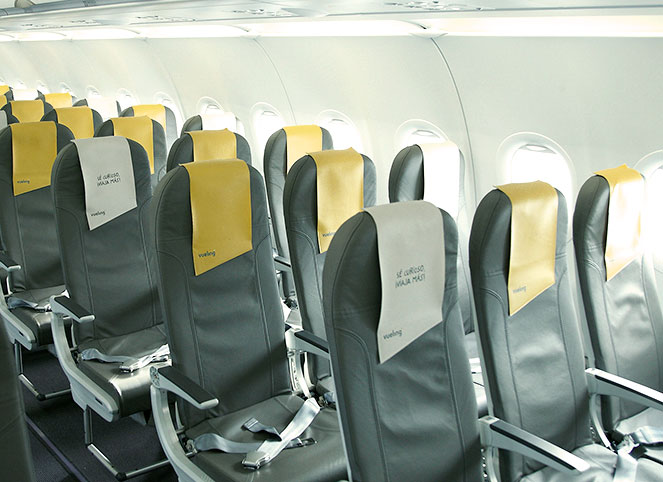 Vueling · 180 seatsSpace OnePhoto: Vueling | 6 | 1–1 | 3-3 | Standard seat | — |
Vueling · 180 seatsSpace PlusPhoto: Vueling | 18 | 2–4 | 3-3 | Standard seat | — |
Vueling · 180 seatsEconomyPhoto: Vueling | 156 | 5–31 | 3-3 | Standard seat | — |
Air New Zealand Airbus A320-200 (171 Economy)
171 seats: 9 good, 6 mixed, 12 to avoid
Best seats
- Row 1, seat A (Economy): front row by the forward door.
- Row 1, seats B and C (Economy): exit row with extra legroom
- Row 12, seats A, B, D, E and F (Economy): exit row with extra legroom
- Row 12, seat C (Economy): second exit row, which reclines.
Seats to avoid
- Row 10, seat A (Economy): in front of the exit rows; does not recline.
- Rows 10 and 29, seats B, C, D, E and F (Economy): does not recline
- Row 29, seat A (Economy): last row; does not recline.
Vueling Airbus A320-200 (180 seats)
180 seats: 26 good, 10 mixed, 12 to avoid
Best seats
- Row 1, seats A, C, D and F (Space One): space One, the front row: about 20% more room than a standard seat by Vueling's figures, nobody in front and first off the plane. The front lavatory and galley are just ahead.
- Rows 2–4, seats A, C, D and F (Space Plus): space Plus: one of the extra-room rows 2 to 4 Vueling sells near the front, with priority boarding and a quick exit.
- Rows 2–4, seats B and E (Space Plus): space Plus: Vueling's extra-room rows 2 to 4
- Row 14, seats A and F (Economy): second overwing exit row: extra legroom, a window, and seats that should recline; you must be able to help in an emergency.
Seats to avoid
- Row 11, seats A, B, C, D, E and F (Economy): row in front of the overwing exits: recline is likely limited.
- Row 31, seats A, B, C, D, E and F (Economy): last row, against the rear lavatory and galley: likely limited recline, galley noise and the queue beside you.