News
Korean Air firms up its 103-jet Boeing order: what it means for Prestige, first class and Incheon
Twenty 777-9s, 25 787-10s, 50 737-10s and eight freighters are now firm. What it means for Korean Air's premium cabins, the Asiana merger and Incheon's lounges.
By Patrick Karsh, Founder, Lounge Frog ·
Page updated October 2026.
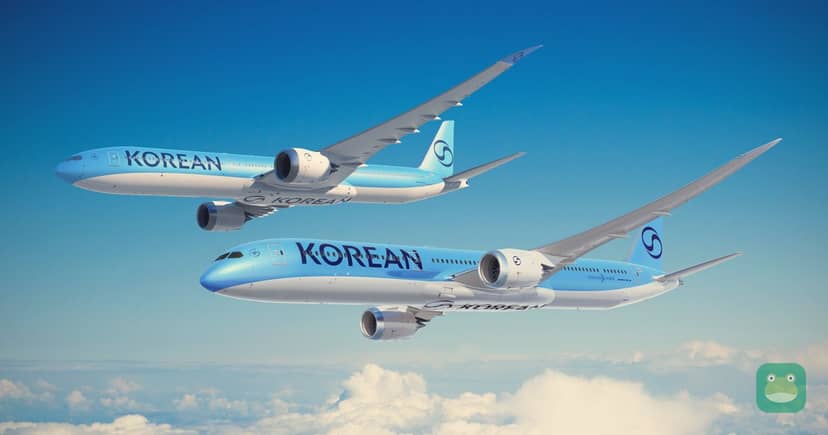
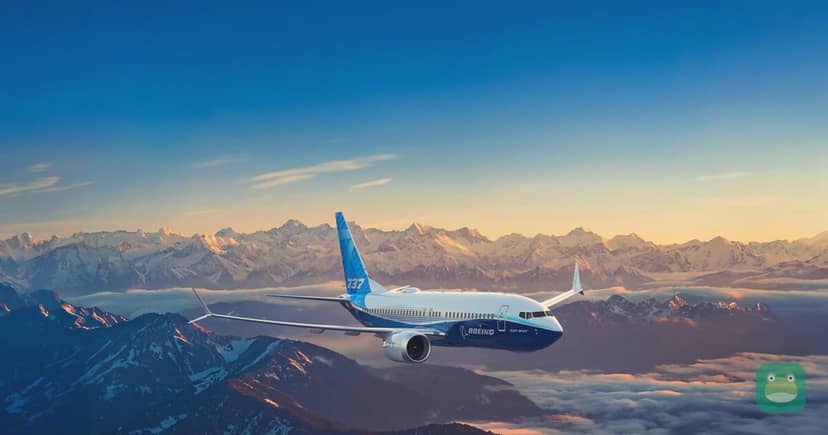
Korean Air has turned its biggest-ever aircraft deal into a firm order. On September 16 in Seoul, the airline and Boeing said the 103-jet purchase first promised in August 2025 is now signed. The order covers 20 777-9s, 25 787-10s, 50 737-10s and eight 777-8 Freighters, according to Boeing's announcement.
For a Korean Air passenger, the headline number matters less than the mix. Two of these types will carry the airline's long-haul premium cabins for the next two decades. The third will fly its short hops around Asia. Here is what the release says, what it does not, and where to wait at Incheon in the meantime.
Three passenger jets, three jobs
The 777-9 is the big one. It is the largest version of Boeing's 777X and the natural successor to the 777-300ERs, 747-8s and A380s that fly Korean Air's longest routes today. Those are also the jets that carry Korean Air's first class. Boeing's release does not say which planes the 777-9s will replace, and Korean Air has not said whether the 777-9 will get a first-class cabin. That is the open question for premium flyers.
The 787-10 is a known quantity: Korean Air already flies the type. When Boeing first announced the 787-10 deal in July 2024, it said the jets would come with new business-class suites and Wi-Fi, for routes to Europe, North America and busy regional cities in Asia. The 25 jets in this order are on top of the 20 787-10s and 20 777-9s Korean Air firmed up in March 2025, so the airline now has 45 787-10s and 40 777-9s on the books.
The 50 737-10s are the largest 737 MAX. They will take over the short-haul flying to Japan, China and Southeast Asia that Korean Air and Asiana now do with a mix of 737s and A321s. Boeing says the 737-10 can carry up to 230 passengers. Korean Air has not said how it will lay out the cabin.
The eight 777-8 Freighters carry no passengers. They are Korean Air's first order for the type and will renew a cargo fleet of 747 and 777 freighters.
When the jets arrive
Boeing's release gives no delivery dates, and Korean Air has not published a schedule. Two things matter.
First, two of the three passenger types have not yet been certified. The 777-9 is still in flight testing, and Boeing has said its first delivery to any airline is now expected in 2027. The 737-10 is also waiting on certification. The 787-10 is the only passenger type in this order already in service.
Second, this is a long program. In a March 2026 stock exchange filing reported by ch-aviation, Korean Air described the purchase as part of a fleet plan running through 2039, with spare engine deliveries scheduled into that year. Trade press has reported deliveries planned between 2026 and 2039. The first jets could arrive soon, but the last ones are more than a decade out.
One fleet for Korean Air and Asiana
Korean Air took control of Asiana Airlines in late 2024 and plans to fold the two into one carrier over the next several years. Boeing's August 2025 release said the order supports that integration, and that Korean Air's order book with Boeing would reach 175 airplanes once this deal was finalized.
The merger is the real reason the numbers are so large. Korean Air inherited Asiana's A350s and A380s, plus its regional Airbus narrowbodies. One large Boeing order makes crew training, maintenance and cabin standards simpler for the combined airline. For passengers, it means the Asiana product will slowly give way to Korean Air's Prestige and first-class standard as the new jets arrive.
Walter Cho, Korean Air's chairman and CEO, said when the deal was first announced that the aircraft are "the core of our fleet modernization strategy."
One practical effect is alliance access. Korean Air is a SkyTeam carrier, and Asiana is still in Star Alliance. Asiana is set to leave Star Alliance as the two airlines combine, and Star Alliance is opening its own lounge at Incheon in response. Until then, Star Alliance Gold members flying Asiana still have lounge access at Incheon.
Where to wait at Incheon
Korean Air flies from Incheon's Terminal 2, where it rebuilt its flagship lounges this year. The Korean Air First Class Lounge sits on the fourth floor near gate 248. It has six showers and a cocktail bar, and it is for first-class passengers and Morning Calm Premium and Million Miler members, each with one guest. It rates 4.6 in our directory.
Business-class flyers have two large Prestige lounges on the same floor. The Prestige Lounge (East), across from gate 253, holds 600 people and is open 6 a.m. to 10 p.m. The Prestige Lounge (West) opens earlier, at 4 a.m., and runs until 11:30 p.m. with a full bar. Both rate 4.6. Prestige passengers get in alone; SkyTeam Elite Plus members and Morning Calm Premium members can bring one guest. The smaller Prestige Garden East and West lounges are the quieter alternatives.
Asiana's lounges remain in Terminal 1 for now. The Asiana Business Lounge (East), near gate 11, is the best rated at 4.7 and admits Star Alliance Gold members with a guest. It is listed by Priority Pass, reportedly only when departing on a Star Alliance flight.
Overseas, the Korean Air Lounge at LAX and the KAL Lounge at Narita both rate 4.1. The JFK lounge is weaker, at 2.8.
SKYPASS members should watch for cabin news. The 103 jets are signed. What Korean Air puts inside them is the next story.
Written and checked to our editorial standards. Scores follow our methodology. Join the discussion below.