What was reported
Cathay Pacific plans to seek up to 50 more widebody aircraft to complete its long-term growth plan and will hold talks with Airbus and Boeing next year, Bloomberg reported on October 15, citing people familiar with the matter who asked not to be named. The same report says the airline is nearing decisions on additional single-aisle and widebody jets through options and purchase rights it already holds, and that those decisions could come as early as November.
Cathay did not confirm it. In a statement carried by Bloomberg, the airline said it "reviews its fleet requirement on an ongoing basis" and does not comment on market rumors. No aircraft types were named, and the MT Newswires summary that moved the story across financial wires added nothing beyond the headline figure.
What Cathay has already bought
The report lands on top of a backlog that is already the largest in the airline's history. Cathay's interim results filing to the Hong Kong stock exchange, dated August 5, lists 105 aircraft on firm order as of June 30: 81 for Cathay Pacific and 24 for HK Express, with 8 due in 2026, 21 in 2027 and 76 in 2028 or later. The group also holds rights to acquire 87 more aircraft, which is the pool Bloomberg says is now being drawn on.
The widebody core of that order book, per ch-aviation, is 35 Boeing 777-9s, 30 Airbus A330-900neos and 8 A350F freighters for Cathay Cargo. The balance is A320neo-family narrowbodies, mostly for HK Express. The group's chair put the total commitment to fleet, cabins, lounges and digital projects at "around HK$150 billion," and ch-aviation reports the stated ambition is a fleet of about 300 aircraft within a decade, up from 235 today, with 150 new deliveries split evenly between growth and replacement.
Fifty more widebodies on top of that would be a large step, not an incremental one. Cathay's passenger fleet is built around the A350-900 and -1000, the 777-300ER and the A330-300, and the 777-300ERs are the type the 777-9s are meant to replace. A new order of this size would have to cover both the next replacement wave and the capacity the group says it needs for a bigger Hong Kong hub.
Why now
Demand is the short answer. The interim filing shows Cathay Pacific carried 16.0 million passengers in the first half, up 17.5 percent, at an 87.5 percent load factor, and first-half profit attributable to shareholders rose 71 percent to HK$6.2 billion, helped by a HK$1.4 billion gain on diluting its Air China stake. Chair Guy Bradley attributed part of the traffic to passengers who chose to connect through Hong Kong instead of other hubs because of the Middle East conflict, a theme the airline has repeated in its monthly traffic releases since spring. Travel Weekly reported in July that June passengers rose 12 percent on 6 percent more capacity, the kind of gap that persuades a board to buy aircraft.
Cargo is pulling in the same direction. Bradley credited shipments of high-value technology products for the data center industry and the AI boom, and Cathay Cargo added two A350F freighters in June to take that order to eight. The group says it remains on track for passenger capacity growth of about 10 percent this year.
The counterweight is fuel. Net fuel costs rose 59 percent in the first half as jet fuel nearly doubled between the first and second quarters, and Bradley's outlook was "cautiously optimistic for the rest of the year, subject to developments in the Middle East situation." That caveat applies to the order too: the traffic Cathay is winning from Gulf hubs is traffic the Gulf carriers will fight to get back.
The problem is not signing, it is receiving
Whatever Cathay orders next year will join a queue. Bloomberg notes that supply-chain problems are delaying deliveries across the industry, and Cathay's own filing shows 76 of its 105 aircraft are due from 2028 onward.
The 777-9 is the clearest example. Cathay's first was due in the second half of 2027 when ch-aviation checked in August. Boeing told customers in July that the program had passed the halfway point in certification testing and had approval to begin ETOPS demonstrations, with first deliveries still targeted for 2027, according to ch-aviation's report on Lufthansa. But FAA Administrator Bryan Bedford said in June that he expects 777-9 certification "early next year," after the remaining 737 MAX variants, as AirData News reported. Lufthansa, the launch customer, is negotiating compensation for taking early-build jets and has kept A340-300s in reserve in case the date slips again. Cathay is far enough back in the line that a Boeing slip of a few months moves its first 777-9 toward 2028.
The A350F tells the same story on the Airbus side: originally due in 2027, now about six months late. An airline that needs 50 more widebodies by the early 2030s has to order them now, because the slots are what is scarce, not the money.
What it means for passengers
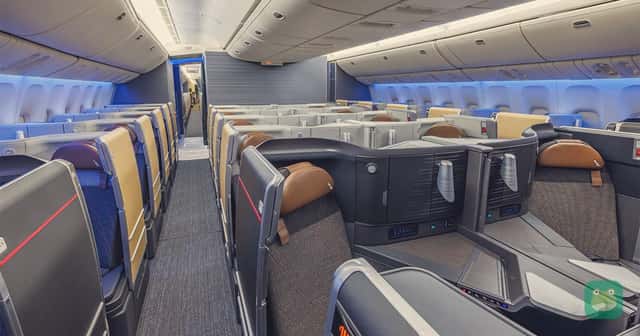
Nothing before 2028, and that is the point. The cabins travelers will see over the next two years are the ones already funded: the Aria Suite business class rolling across the 777-300ER fleet, the A330neos arriving from next year, and the new lounges in the HK$150 billion program. The next order decides what Cathay looks like after that, and whether Hong Kong keeps the transit traffic it gained while the Gulf was in turmoil.
For the two manufacturers, 50 widebodies from a carrier that already splits its fleet between them is one of the larger open competitions of 2027. Boeing will pitch more 777-9s and the 787; Airbus will pitch more A350s, where Cathay already operates 48. Expect both to be in Hong Kong well before the talks formally open.