Oman Air began flying under its own name in March 1993, but its roots reach back to 1970, when a company called Oman International Services started handling civil aircraft at Muscat's old Beit Al Falaj airport (Oman Air history). Over the following decades the airline was a partner of Gulf Air and then, from 2007, the national carrier, with the government as its dominant owner (MEED). In August 2023 the government launched a transformation plan to deal with its debts and losses (Times of Oman). Oneworld welcomed Oman Air as its 15th member on June 30, 2025 (oneworld), and in April 2026 the airline reported its first positive EBITDA in 15 years (Oman Observer).
This article follows that history in order. Each factual statement links to its source, and where sources disagree the text says so. A section near the end lists the points that rest on weak or partial evidence.
Before the airline: aircraft handling and Gulf Aviation
Gulf Aviation, later Gulf Air, was founded in Bahrain in 1950 by Freddie Bosworth, a former Royal Air Force pilot, and began scheduled services to Doha, Sharjah and Dhahran, according to a 2015 paper from Rice University's Baker Institute. The British Overseas Airways Corporation later held a stake. In 1973 the governments of Abu Dhabi, Bahrain, Oman and Qatar bought out that stake, took a quarter-share each in a new holding company called Gulf Air, and made it the carrier for the four states (Baker Institute).
Oman's own aviation business grew alongside that arrangement. Oman Air's archived corporate history records that in 1970 Oman International Services began handling civil aircraft at the old Beit Al Falaj airport. In 1972 it moved into the new Seeb terminal, which was only partly finished, and the passenger terminal was completed in 1973 (Oman Air history).
The corporate timeline then moves through a series of steps that tied the Omani company to Gulf Air's operations:
- In 1977 the company took over Gulf Air's Light Aircraft Division and set up an aircraft engineering division (Oman Air history).
- In 1981 Oman Aviation Service was founded as a joint stock company. It bought 13 aircraft from Gulf Air's Light Aircraft Division (Oman Air history).
- Jet services to Salalah began in 1982 as a joint venture with Gulf Air. In 1984 the company bought its first jet, a Cessna Citation, and took over ground services for domestic flights (Oman Air history).
The sources describe the corporate lineage differently. MEED's 2010 profile of the airline says Oman Air was established in 1993 after the merger of Gulf Air's light aircraft division and Oman International Services. The company's own timeline places the light aircraft takeover in 1977 and the incorporation in 1981, and lists 1993 as the year the airline itself was established. In this article, 1993 is treated as the start of scheduled flying under the Oman Air name, and the earlier dates as the history of the companies that fed into it.
1993 to 2006: a regional airline with a Gulf Air alliance
The corporate timeline gives the early route history in detail. Oman Air's first flight went to Salalah in March 1993. The first international flight, to Dubai, followed in July on a leased Boeing 737-300. Trivandrum, its first Indian service, started in November. Kuwait, Karachi and Colombo followed in 1994 and Mumbai in 1995 (Oman Air history).
The same source lists commercial agreements in the second half of the decade. In 1996 Oman Air started dedicated cargo operations and signed a block space agreement with Swissair. In 1997 it began a code share with KLM, and in October 1998 it became an IATA member. In 1999 it bought two ATR 42-500 turboprops and added four new routes (Oman Air history).
Gulf Air stayed a close partner. In 2001 the two airlines agreed a code share on intra-Gulf and Bangladesh routes. The same year Oman Air arranged a purchase and lease deal for five Boeing 737 Next Generation aircraft, and a 737-800 joined the fleet; a second 737-800 followed in 2003 (Oman Air history).
The timeline also records the build-out of a wider African and Middle Eastern network. Dar es Salaam, Zanzibar, Beirut and Mombasa were added in 2002 and Cairo resumed. Bahrain began in 2004, Delhi and Hyderabad in 2005 and Amman in December 2006 (Oman Air history). Passenger numbers were modest by later standards; a table in the next-but-one section lists them.
Airport infrastructure also changed. The airline opened the Wings of Oman Lounge for business class passengers at Seeb in 2000 (Oman Air history).
2007: leaving Gulf Air
Oman's relationship with Gulf Air ended in 2007. On May 6, 2007, Gulf News reported that Oman's economy minister, Ahmad Bin Abdul Nabi Makki, had delivered a withdrawal letter to Bahrain's finance minister, Shaikh Ahmad Bin Mohammad Al Khalifa. The paper noted that Gulf Air had started with four owners, Bahrain, Oman, Qatar and Abu Dhabi, and that Qatar left in 2002 and Abu Dhabi in December 2005 (Gulf News).
Reuters reported that Bahrain took full ownership of Gulf Air at an extraordinary general meeting. Reuters said the airline was losing more than $1 million a day (Reuters). FlightGlobal's May 2007 regional briefing said Oman had cut its Gulf Air share from 50 percent to 20 percent earlier that year and raised its Oman Air stake to over 80 percent, and that Gulf Air would cut Muscat services over six months.
The consequences for Oman Air were direct. MEED says the airline was recognized as the national carrier in 2007. A government capital injection of RO57 million ($148 million) lifted the state's holding from 34 percent to 82 percent (MEED). The Baker Institute paper adds the regional context: Qatar and Abu Dhabi had followed Dubai in setting up their own national airlines, which led them to leave Gulf Air, and after Oman's exit in May 2007 Gulf Air became Bahrain's national airline (Baker Institute).
2007 to 2010: long-haul flying and large losses
Oman Air began long-haul flying in November 2007 with Bangkok and London, MEED reports (MEED). According to its own timeline, the company was renamed OMAN AIR (SAOC) on April 21, 2008, and Kozhikode and Bangalore flights started in June (Oman Air history).
Leadership changed at the same time. MEED reported on July 5, 2008 that Peter Hill had been appointed chief executive (MEED, 2008). MEED's 2010 profile says Hill came from SriLankan Airlines and was appointed in April 2008, and that Ziad Karim al-Haremi had led the airline from 2005 until his death (MEED).
The expansion was costly. In 2009 the fleet grew by 28 percent, and new routes opened to Paris, Frankfurt, Munich, Male and Colombo. Seat utilization was 61 percent in 2009. The owner kept funding it. In March 2010 the capital base was raised by another 67 percent to $1.3 billion, which took the government's stake to 99.6 percent, and MEED reported 5,300 staff, more than 60 percent of them Omani (MEED).
| Year | Passengers | Net loss |
|---|---|---|
| 2004 | 0.98M | Not reported |
| 2005 | 1.1M | Not reported |
| 2006 | 1.2M | Not reported |
| 2007 | 1.5M | Not reported |
| 2008 | 1.98M | $108M |
| 2009 | 2.4M | $165M |
Source: MEED, Oman Air company profile, 2010. Losses for 2004 to 2007 and all years from 2010 to 2022 are not in our sources.
Management expected to break even in 2014, when a new Muscat terminal was also due (MEED). Neither date held. The new terminal opened in 2018, and Oman Air reported its first positive EBITDA in 15 years only for 2025, as later sections show.
The fleet: 737s, A330s and the 787
Narrowbodies
In June 2013, at the Paris Air Show, Boeing and Oman Air announced an order for five 737-900ERs worth $473 million at list prices, which made Oman Air the first customer in the Arabian Gulf region for the type. At that time the airline operated 15 737-800s and two 737-700s, with six 737-800s and the five 900ERs on order and six 787-8s also on order. Wayne Pearce was chief executive (Boeing, 2013).
Airbus A330s
The A330 arrived in September 2009. Aviation News, repeating an Airbus release, reported that the first A330-200 was delivered on a lease from AWAS. Oman Air had ordered seven A330s in 2007, five of them directly from Airbus (Aviation News). The type stayed in service for 15 years. ch-aviation reported that the last A330 flights operated on March 30, 2024.
The 787 Dreamliner
Boeing's October 2015 release marked delivery of Oman Air's first 787, from an order for six 787-8s placed in November 2011. The first deployment was to Saudi Arabia and Europe (Boeing, 2015).
The first 787-9, registered A4O-SC, was delivered on February 23, 2017, with 30 flat-bed business suites and 258 economy seats, according to Key.Aero. Key.Aero said four 787-8s were already in service at that point.
The 737 MAX
In October 2015 Oman Air ordered 20 737 MAX aircraft, and it later agreed to lease 10 more, Boeing said when it delivered the first MAX on January 31, 2018. Boeing described the airline's fleet at that time as 27 737s and seven 787s. In Oman Air's configuration the MAX 8 seats 162, with 12 business and 150 economy seats. Abdulaziz Al Raisi, then acting CEO, was quoted (Boeing, 2018).
2019 to 2022: the MAX grounding and the pandemic
After the March 2019 Ethiopian Airlines crash, Reuters reported that Oman suspended 737 MAX flights; that page could not be retrieved in full for this article, so only its headline is relied on. By June 2019, ch-aviation reported, five 737-8s were grounded and three further deliveries had been suspended indefinitely. Chief executive Abdulaziz Al Raisi told the Oman News Agency on June 14 that the grounding had a "major financial impact" and curtailed the airline's growth in 2019. The airline reactivated four Embraer E170s to fill the gap (ch-aviation).
Oman's civil aviation authority issued a circular in March 2021 allowing operators to resume MAX flights, but said Oman Air would still have to finish the required modifications, pilot retraining and an audit first. ch-aviation also reported that three built aircraft were canceled in October 2020 and stored. Its database counted a total of 15 units ordered in 2015, which differs from Boeing's figure of 20 orders plus 10 leases, so the exact order history is uncertain.
The pandemic added to the pressure. In November 2021 Al Raisi told Reuters that the airline needed more funding and would ask the government for aid and look to capital markets, and that it had laid off around a fifth of its 5,800 staff, according to ch-aviation's summary. The airline was then flying at about half its pre-pandemic capacity and expected to return to profit in 2024. The same report counted 51 aircraft in the fleet, a figure from ch-aviation's own database rather than the airline (ch-aviation).
The new Muscat airport
Commercial operations at the new Muscat International Airport terminal began on March 20, 2018, the Ministry of Transport and Communications said, as reported by the Oman Observer. The terminal was designed for 20 million passengers a year and cost RO 1.7 billion. It has 96 check-in counters and 29 boarding bridges (Oman Observer).
Premium cabins and Muscat lounges
Before 2024, Oman Air sold a First Class product. A June 2022 oneworld release described the airline as offering "exclusive First Class Private Suites on longer-haul flights" in a two- or three-class configuration, and said it had won the APEX Passenger Choice Award for Best Seat Comfort in the Middle East.
The airline dropped that product in 2024. In an August 21, 2024 press release, it announced Business Studio, a cabin that would replace First Class, keep the layout, lie-flat seats and Wi-Fi, and carry lower fares. It would feature mainly on London and Bangkok services and could be booked from September 9, 2024. The release described an 82-inch pitch, privacy walls for every seat and à la carte dining. Con Korfiatis, the CEO, said traditional First Class had seen diminished demand (Oman Air).
Korfiatis gave the reasoning to The National in October 2024: the first class cabin "was flying empty" while business class was full (The National). A year later he told Gulf News that First Class had a load factor of only 8 percent in 2023 (Gulf News).
At Muscat, Oman Air's FAQ says there is one dedicated Business Studio Lounge, on the first floor of the departure terminal after immigration, open to Business Studio ticket holders. It lists a personal chef, a bar, showers, a business center and a limousine transfer to the aircraft (Oman Air FAQ). The oneworld announcement of the airline's membership in 2025 said Oman Air became one of only 10 airlines to win the APEX World Class by Yates+ award in late 2024, and the first to gain that status for its Business Class Lounge at Muscat (oneworld, 2025).
SalamAir and the domestic market
A domestic low-cost rival appeared in January 2017. ch-aviation reported that the low-cost carrier SalamAir began revenue operations on January 30, after getting its air operator's certificate from the Public Authority for Civil Aviation the week before. It used one of three A320-200s leased from LATAM, and flew a Salalah and Muscat service first. It was set up by Muscat National Development and Investment Company, known as ASAAS (ch-aviation).
Debt, government support and the 2023 transformation plan
AGBI wrote in April 2025 that Oman Air had made an average annual loss of RO 150 million over the previous ten years, a figure it did not source (AGBI).
The government moved to restructure the airline in mid-2023. Times of Oman reported on August 7, 2023 that Saeed Al Maawali, the transport minister and Oman Air's chairman, had set up a transformation office at a press conference at Oman Air's headquarters. He described a plan built on four pillars, with financial sustainability first, aimed at turning the airline into a profit-making business in "four to five years". He admitted the airline's debts were significant, said the plan came from the consultancy Oliver Wyman, which submitted its study in June, and said implementation began in the first week of July. He named Nasser Al Salmi acting CEO in place of Abdulaziz Al Raisi (Times of Oman).
In February 2024 the minister said losses in 2023 were cut by 25 percent. He said the airline had avoided commercial bank borrowing and government support that year, and that the plan would require a decision on how big the fleet should be and a review of destinations. He also said that the fleet and network changes would produce surplus aircraft and staff (Times of Oman).
A second account differs on government money. The Oman Observer reported in July 2024, citing the airline's 2023 annual report, that the government gave RO 60 million in support in 2023. The same article said the airline had loans of RO 390 million over five years, long-term obligations including debt and aircraft leases of RO 1.6 billion, and equity that had fallen by nearly half since 2019 (Oman Observer). The two reports could refer to different kinds of funding, but neither source reconciles them.
Operating losses came down year by year. Oman Air's own presentation, as reported by Zawya, put the operating loss at RO 103 million in 2023, RO 72 million in 2024 and RO 52.2 million in 2025. The Oman Observer's January 2025 account gave a different EBIT figure for 2024, RO 76 million, while AGBI reported RO 72 million (AGBI). Because the measures are inconsistent, this article uses the figures from the single Zawya report and flags the rest.
| Year | Operating loss | Passengers | Load factor |
|---|---|---|---|
| 2023 | RO 103M | Not reported | Not reported |
| 2024 | RO 72M | 5.4M | 76% |
| 2025 | RO 52.2M | 5.8M | 82% |
Source: Zawya for operating losses, the Oman Observer for 2024 passengers and Oman Air's 2025 results release for load factor. The Oman Observer gives RO 76M as the 2024 EBIT loss. EBITDA was RO 3.2M in 2025; earlier EBITDA is not reported.
What the plan changed
Fleet. The Oman Observer reported that the fleet had fallen to 32 aircraft by the end of 2024, 29 percent fewer than in 2023 and 40 percent fewer than in 2019, and that the airline carried 5.4 million passengers that year (Oman Observer). The A330s went first. ch-aviation counted ten of them withdrawn by March 30, 2024, and said four were then wet-leased to Qatar Airways (ch-aviation). In October 2024 Korfiatis said the airline planned an all-737 MAX narrowbody fleet by the end of 2026 (The National). By October 2025 Gulf News reported that the airline had disposed of all 10 A330s and sold its first two 787-8s. (Gulf News). The same piece put the fleet at about 23 narrowbodies, mostly MAXs, and 10 787-9s, with six more 787s due from 2027 (Gulf News).
| Date | Fleet | Source |
|---|---|---|
| June 2013 | 15 737-800s, 2 737-700s | Boeing |
| January 2018 | 27 737s, seven 787s | Boeing |
| End of 2024 | 32 aircraft | Oman Observer |
| October 2025 | About 23 narrowbodies, 10 787-9s | Gulf News |
| April 2026 | 33 aircraft; 39 by 2029 | Oman Observer |
Source: Boeing, 2013 and 2018, Oman Observer, 2025 and 2026, and Gulf News. Counts are not consistent in type, so compare with care.
People. Oman Air's April 2025 press release said an 18-month rightsizing program had finished, with about OMR 15 million spent on severance. Of 415 surplus employees, 74 were redeployed within the airline, 87 were offered roles elsewhere in aviation and 293 took severance of 12 to 24 months. The airline replaced 487 expatriates and raised its Omanisation rate to 79.4 percent from 74.8 percent in 2023 (Oman Air). Korfiatis told Gulf News that headcount had fallen from about 4,300 to just under 3,200 (Gulf News).
Network. ch-aviation said the airline axed Islamabad, Lahore, Colombo and Chittagong and cut frequencies elsewhere (ch-aviation). Korfiatis said in October 2024 that network capacity had been cut by 30 percent that year (The National). He told Gulf News that reliance on connecting passengers had fallen from 85 percent to under 50 percent in just over 12 months, and that South Asia, where the airline made "the majority of our losses" on low-yield transit traffic, had been scaled back (Gulf News).
Growth again: Rome, Amsterdam and beyond
The first new route in five years was Rome, announced in October 2024 for a December start at four flights a week (The National). Gulf News said a second daily London Heathrow service would return in late October 2025 (Gulf News). Oman Air's own release on its 2025 results said the airline carried 5.8 million passengers, up 8 percent on 2024 and 57 percent on 2022, with 64 percent of them point-to-point and a rise in the load factor from 76 percent to 82 percent. It also reported a 19 percent rise in Salalah passengers (Oman Air).
On December 20, 2025, Oman Air flew its first service to Copenhagen, routed through Baghdad as a fifth-freedom flight, with a 737 MAX (Oman Air). The airline announced Singapore, with four flights a week from July 2, 2026, on December 16, 2025. It said it would be flown by a 737 MAX in Business and Economy cabins (Oman Air).
In July 2026 the airline launched five routes in one month. Singapore and Sochi started on July 2, Tashkent and the first direct Dubai to Salalah service on July 3, and Abu Dhabi on July 9, which Oman Air said would bring its network to 49 destinations (Oman Air). Its winter 2026/27 schedule, effective October 25, 2026, tripled Zurich capacity compared with summer, raised several European routes to as many as five flights a week, lifted Moscow to up to eight weekly flights, and added codeshares with Lufthansa, SWISS and Malaysia Airlines (Oman Air).
Oneworld
ch-aviation reported in November 2021 that Oman Air was pursuing oneworld membership with Qatar Airways as sponsor, and that the two airlines had signed a reciprocal frequent flyer agreement in early November (ch-aviation). On June 20, 2022, oneworld said the airline had been elected a member designate at the IATA Annual General Meeting in Doha, with membership expected in 2024. The announcement listed three Oman Air lounges at Muscat, Salalah and Bangkok, and codeshares with Malaysia Airlines, Qatar Airways, Royal Jordanian and SriLankan Airlines (oneworld, 2022).
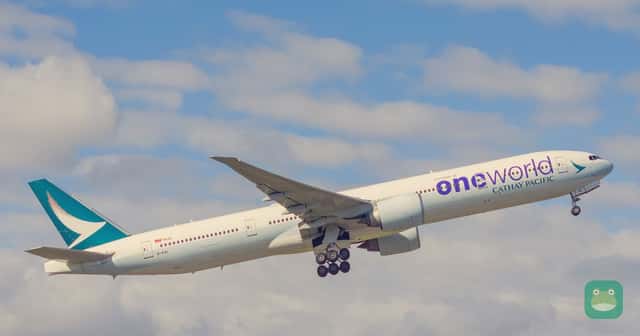
Membership came a year later than that 2022 forecast. Oneworld announced on June 30, 2025 that Oman Air was its 15th member, with benefits from July 1. The release said the airline served 42 destinations in 22 countries and territories and offered three cabins, including Business Studio private suites on select long-haul flights. A new Muscat to Amsterdam nonstop was part of the launch (oneworld, 2025). Oman Air's own release said membership gave access to more than 900 destinations in 170 countries, with double-daily Muscat to London from October 2025 (Oman Air). FlightGlobal reported that Oman Air first announced its intention to join at the 2022 IATA AGM in Doha and noted its all-Boeing fleet (FlightGlobal).
Leadership
Oman Air has changed chief executives often. Aviation Week wrote in October 2026 that the airline has now had five CEOs since 2012 (Aviation Week). The documented sequence runs as follows:
- Ziad Karim al-Haremi led the airline from 2005 until his death, and Peter Hill, formerly of SriLankan, was appointed in 2008 (MEED; MEED, 2008).
- Wayne Pearce was CEO in June 2013 (Boeing) and left in February 2014, Aviation Week reported when it announced the August 2014 appointment of Paul Gregorowitsch for an initial two-year term (Aviation Week, 2014).
- Abdulaziz Al Raisi was acting CEO in January 2018 (Boeing) and CEO in 2019 and 2022 (ch-aviation; oneworld).
- Nasser Al Salmi became acting CEO in August 2023 (Times of Oman).
- Con Korfiatis was appointed in May 2024 with more than 30 years of aviation experience (Gulf News).
- Nasser Al Sharji took over on September 1, 2026, and Korfiatis became Advisor to the CEO (Oman Air).
Al Sharji most recently served as CEO of Transom Handling and acting CEO of Oman Airports Management Company (Oman Air). SalamAir named Eng. Yaqoob Al Kiyumi as its CEO from October 1, 2026 (Gulf News). Its previous CEO, Adrian Hamilton-Manns, was quoted in SalamAir's February 2026 release (SalamAir). Aviation Week framed the two changes as foreign-led airlines handing over to Omani executives (Aviation Week).
2025 and 2026: first positive EBITDA
On April 13, 2026 the Oman Observer reported that Oman Air had posted EBITDA of RO 3.2 million for 2025, its first positive result in 15 years, alongside an EBIT loss of RO 52.2 million, down from RO 72 million in 2024. The airline cut bank loans by RO 27 million, which the paper described as the first year of debt reduction since 2009. Unit cost fell by 6 percent, and the airline carried 5.8 million passengers at an 82 percent load factor. At that point it served 45 destinations with 33 aircraft, with the fleet due to reach 39 by 2029 (Oman Observer).
The year-to-date picture in 2026 included disruption. Zawya reported that in early 2026 the airline kept 80 percent of its network running through regional disruption, added 1,378 extra flights, and carried more than 393,000 passengers in that period, with cargo capacity up 490 percent (Zawya). Aviation Week wrote on July 20, 2026 that Oman Air had not given up hopes of a profit that year despite disruption from the war with Iran (Aviation Week). The visible part of that article gave no 2026 figure, so none is reported here. Korfiatis had earlier said Oman Air aimed to break even by 2027 (The National), and the 2025 results release said the airline was aiming for breakeven "in record time" (Oman Air).
What the sources do not settle
Several parts of the history rest on thin or conflicting evidence.
- The early corporate history (1970 to 2008) comes from Oman Air's own archived timeline, captured in 2009. It is a primary source but a self-published one, and it uses "Oman Aviation Service" for the company before the 2008 rename while also listing the airline as established in 1993. MEED describes a merger in 1993 that the timeline does not mention.
- Figures for the airline's finances from 2011 to 2018 are missing from this article. No audited statements or ministerial figures for those years were retrieved.
- The 2024 loss appears as RO 72 million in some reports and RO 76 million in another, and the Oman Observer's report on the 2023 government support conflicts with the minister's statement in Times of Oman.
- The Aviation Week July 2026 article describes 2025 as an operating profit for the first time in 18 years in its visible summary. Oman Air's figures show a positive EBITDA but an operating loss. The summary is not used for that claim.
- The 737 MAX order history differs between Boeing and ch-aviation, and several fleet counts come from ch-aviation's database, not from airline statements.
- No Oman News Agency, Ministry of Transport or Oman Investment Authority documents on Oman Air's finances could be retrieved directly. The airline's own 2024 management discussion PDF returned an access error.
Sources
Oman Air (company sources)
- Oman Air, corporate history timeline, archived Aug. 31, 2009 (Wayback Machine)
- Oman Air, FAQs: General Questions (Business Studio Lounge)
- Oman Air press release, Business Studio, Aug. 21, 2024
- Oman Air press release, completion of organizational restructuring, April 2025
- Oman Air press release, Oman Air joins oneworld, June 30, 2025
- Oman Air press release, 2025 results
- Oman Air press release, Muscat-Singapore, Dec. 16, 2025
- Oman Air press release, inaugural Copenhagen via Baghdad flight, Dec. 21, 2025
- Oman Air press release, five new routes, July 1, 2026
- Oman Air press release, Winter 2026/27 schedule, Oct. 13, 2026
- Oman Air press release, Nasser Al Sharji appointed CEO, 2026
Alliance, manufacturers, airport and other primary or institutional sources
- oneworld, Oman Air to join oneworld, June 20, 2022
- oneworld, Oman Air joins oneworld alliance, June 30, 2025
- Boeing, order for five Next-Generation 737s, June 19, 2013
- Boeing, delivery of Oman Air's first 787 Dreamliner, Oct. 11, 2015
- Boeing, first 737 MAX delivered to Oman Air, Jan. 31, 2018
- Aviation News, Oman Air takes delivery of first Airbus A330, Sept. 15, 2009 (reprints an Airbus release)
- SalamAir press release, 9 years, Feb. 1, 2026
- Kristian Coates Ulrichsen, Gulf Airlines and the Changing Map of Global Aviation, Baker Institute, Rice University, June 24, 2015 (academic paper)
News agencies and major business press
- Reuters, Bahrain takes full ownership of Gulf Air, May 2007
- Reuters, Oman suspends 737 MAX flights, March 2019 (page returned an access error; headline only)
- FlightGlobal, Briefing: Middle East, May 21, 2007
- FlightGlobal, Oman Air officially joins Oneworld, June 30, 2025 (paywalled; opening lines only)
- MEED, Oman Air company profile, May 5, 2010
- MEED, Oman Air appoints new CEO, July 5, 2008
- The National, Oman Air needs to 'shrink' before return to growth, CEO says, Oct. 13, 2024
- Aviation Week, Oman Air Taps Paul Gregorowitsch as CEO, Aug. 6, 2014 (paywalled; opening lines only)
- Aviation Week, Exclusive: Oman Air CEO Talks Financial, Structural Aspirations, July 20, 2026 (paywalled; opening lines only)
- Aviation Week, Leadership Shake-Ups At Oman Air And SalamAir, Oct. 28, 2026 (paywalled; opening lines only)
- AGBI, Oman Air posts 2024 loss while airport passenger numbers rise, April 25, 2025
- Gulf News, Bahrain now sole owner of Gulf Air, May 6, 2007
- Gulf News, Oman Air appoints new CEO, May 3, 2024
- Gulf News, Oman Air is reversing its fortunes, Oct. 2, 2025
- Gulf News, Oman Air, SalamAir appoint new CEOs, Aug. 21, 2026
- Zawya (from Oman Daily Observer), Oman Air posts positive EBITDA after 15 years, 2026
Omani press
- Times of Oman, Turnaround plan for Oman Air begins, Aug. 7, 2023
- Times of Oman, Oman Air reports huge reduction in losses in 2023, Feb. 14, 2024
- Oman Observer, New Muscat airport opens on March 20, Jan. 31, 2018
- Oman Observer, Government injects RO 60m into Oman Air in 2023, July 29, 2024
- Oman Observer, Rightsizing sees Oman Air fleet reduced to 32 aircraft in 2024, Jan. 26, 2025
- Oman Observer, Oman Air achieves profitability (EBITDA) for the first time in 15 years, April 13, 2026
Aviation trade press
- ch-aviation, Omani LCC SalamAir commences operations, Jan. 31, 2017
- Key.Aero, Oman Air expansion, April 12, 2017
- ch-aviation, Oman Air boss tires of Boeing, warns of Airbus switch, June 17, 2019
- ch-aviation, Omani CAA ungrounds the B737 MAX, March 10, 2021
- ch-aviation, Oman Air to seek more government, market funding, Nov. 15, 2021
- ch-aviation, Oman Air ends A330 operations, April 3, 2024