News
Kenya Airways needs a $350 million government lifeline just to get its grounded jets flying again
Kenya is lending its loss-making flag carrier $350 million for maintenance and grounded planes, and may swap 122 billion shillings of old loans for equity. Here's what it means if you're booked on KQ.
By Patrick Karsh, Founder, Lounge Frog ·
Page updated October 2026.
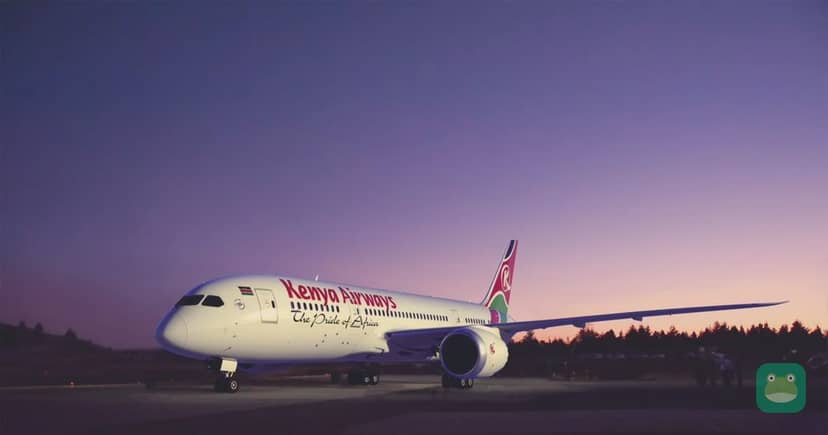
Kenya Airways needs help to keep its planes in the air. On Oct. 9, the airline told investors that Kenya's government will lend it $350 million, about 45.15 billion shillings. The airline says the money is for "immediate and non-deferrable" bills. Near the top of that list are aircraft maintenance and getting grounded planes back into service.
That is the headline for travelers. This is not money for new routes, new seats or new lounges. It is money to fix and fly the jets the airline already has.
The details come from the airline's public announcement, which was addressed to shareholders, Kenya's Capital Markets Authority and the Nairobi Securities Exchange. It is signed by Habil Waswani, the acting group managing director and CEO.
What the government approved
There are two parts to the deal.
- A new $350 million loan. It runs for 10 years. The government can choose to turn it into shares later, if shareholders and regulators approve. It can also be paid back early on terms the two sides agree.
- A swap of old debt. The government has also agreed in principle to convert about 122 billion shillings in existing loans, plus interest, into a tradeable instrument that counts as equity.
The airline is blunt about why the second part matters. It says the swap is meant to move the company from a negative equity position to a positive one. In plain terms, Kenya Airways currently owes more than it owns. The airline hopes a cleaner balance sheet will help it raise money from the market and bring in "suitable strategic partners and investors."
Kenya's Cabinet approved the plan at a meeting chaired by President William Ruto. According to the Cabinet statement, as reported by KBC, the money will be paid out in tranches under the National Treasury's oversight. The same statement says the airline adds more than $1.3 billion a year to Kenya's economy.
None of this is final yet. The airline says the deal still needs signed contracts, shareholder votes where required, and sign-off from the Capital Markets Authority and the exchange. It has also issued a formal cautionary notice telling investors to be careful when trading its shares.
How it got here
The numbers from the first half of 2026 explain the rush. In its Aug. 25 results release, Kenya Airways said revenue rose 9% to 81 billion shillings in the six months to June 30. That came even though it flew 9% less capacity. Planes were fuller, too, with the cabin factor up four points.
Costs grew faster. The airline says its fuel bill rose 32%, driven by tensions in the Middle East. It also blamed a shortage of spare parts and long waits for components, which kept aircraft on the ground. Total operating costs climbed 14%. The result was a loss after tax of 16.1 billion shillings, up from 12.2 billion a year earlier.
There was some good news after June. The airline says one Boeing 787-8 went back into service in mid-July, and a Boeing 777-300ER was redelivered and returned to its fleet.
What it means if you fly Kenya Airways
Nothing changes on your booking today. The airline has not announced any schedule cuts or additions tied to this loan. It also has not said how many aircraft are still grounded, or when they will fly again.
Still, the direction is good news for passengers. Our view is that a short-handed fleet is the biggest risk for anyone holding a ticket. Fewer working planes leave little slack when something breaks. A loan aimed squarely at maintenance and grounded jets goes after that problem first. Delays and cancellations are what hurt travelers most, and spare aircraft are what prevent them.
The bigger question is what comes next. The government has lent Kenya Airways money before. That is where the 122 billion shillings in old loans came from. It is also the airline's largest shareholder, Reuters reports. Critics on X were quick to ask why the answer is always another loan. That is a fair question. The airline's own plan depends on outside investors showing up once the balance sheet is cleaned up. Until they do, the carrier is leaning on the state.
For travelers outside Africa, Kenya Airways matters more than its size suggests. It says it is the only African member of the SkyTeam alliance, alongside airlines like Delta and Air France. It flies to 42 destinations, 33 of them in Africa, through its hub in Nairobi.
You can see the airline's fleet and ratings on our Kenya Airways page. We will update this story when the loan is signed or the airline says which planes are coming back.
Written and checked to our editorial standards. Scores follow our methodology. Join the discussion below.