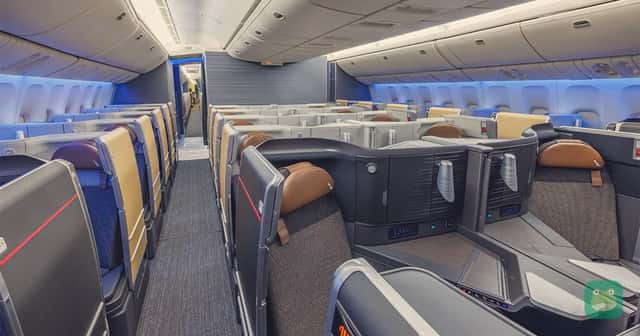
The most interesting part of United's premium push is how the pieces can fit together. A comfortable seat matters. So does the time before boarding, the ability to eat without rushing, and the sense that the whole journey has been considered.
Under Scott Kirby, United has put substantial resources behind that idea. I think the direction is compelling because the investment reaches both the aircraft and the airport. This is an analysis of announced products and confirmed openings, not a firsthand flight review.
Start with our United Airlines guide if you are comparing the carrier with other options.
A cabin investment with a clear purpose
United's March 24 fleet and product announcement set out its next phase of cabin investment. The Elevated Boeing 787-9 includes Polaris Studio seats that United describes as 25% larger than standard Polaris, with wireless charging and a 27-inch screen.
The reason to care is personal space. On a long flight, the ability to arrange your belongings, settle into a seat, and move without feeling boxed in can matter more than a long list of decorative touches.
By its July results update, United said the new Elevated aircraft was serving San Francisco flights to Singapore and London. Its premium configuration includes eight Studio suites and 56 other Polaris seats. That confirmation separates an operating product from an attractive concept.
It does not establish that every departure on those routes uses the same cabin. Nor does an ordinary Polaris booking include a Studio seat. Check the exact flight and seat map.
The ground experience is part of the value
United's Chicago lounge announcement provides another concrete example. The expanded Polaris lounge reopened in April 2025 with roughly 50% more space, more than 350 seats, and a larger dining room.
I like the emphasis on capacity. Beautiful design is welcome, but a lounge needs enough usable space for the people who can enter it. An extra place to sit or eat is easier to value than another promise of exclusivity.
That investment also makes the premium proposition more coherent. For an eligible passenger, the journey can begin with a meal or some quiet time instead of a crowded search for a seat near the gate.
Our United Club and Polaris guide explains why the names should not be treated as interchangeable. Always check the access attached to your particular ticket.
Why this supports Kirby's approach
My reading is that United wants customers to choose its experience, not merely accept whichever itinerary appears cheapest. A stronger cabin paired with a stronger airport experience gives that ambition something tangible.
This does not make premium travel good value at any price. I would compare the extra cost with the length of the flight, the timing of sleep, and how much time I would actually spend at the airport.
The United–Delta rivalry is useful context. Competition gives travelers more reason to compare the whole package, and United's investment makes it a more interesting contender.
What I would check before booking
First, confirm the aircraft configuration. Next, identify the seat being sold. Then check lounge eligibility, connection time, and the fare's change rules. The March announcement noted that privacy doors were temporarily unavailable; it should not be used as proof that working doors are available on a particular flight today.
If your trip uses a regular club, our United Club rankings offer a separate starting point. A premium cabin label should never replace that practical research.
United's progress deserves praise because there is something substantial to examine. Better cabins and larger lounge spaces strengthen the passenger offering. Kirby's ambition becomes more credible when travelers can see the investment at both ends of the boarding bridge.